The Vallog watch robbery in Berlin
The story from the perspective of a victim, including the serial numbers of some of the stolen watches
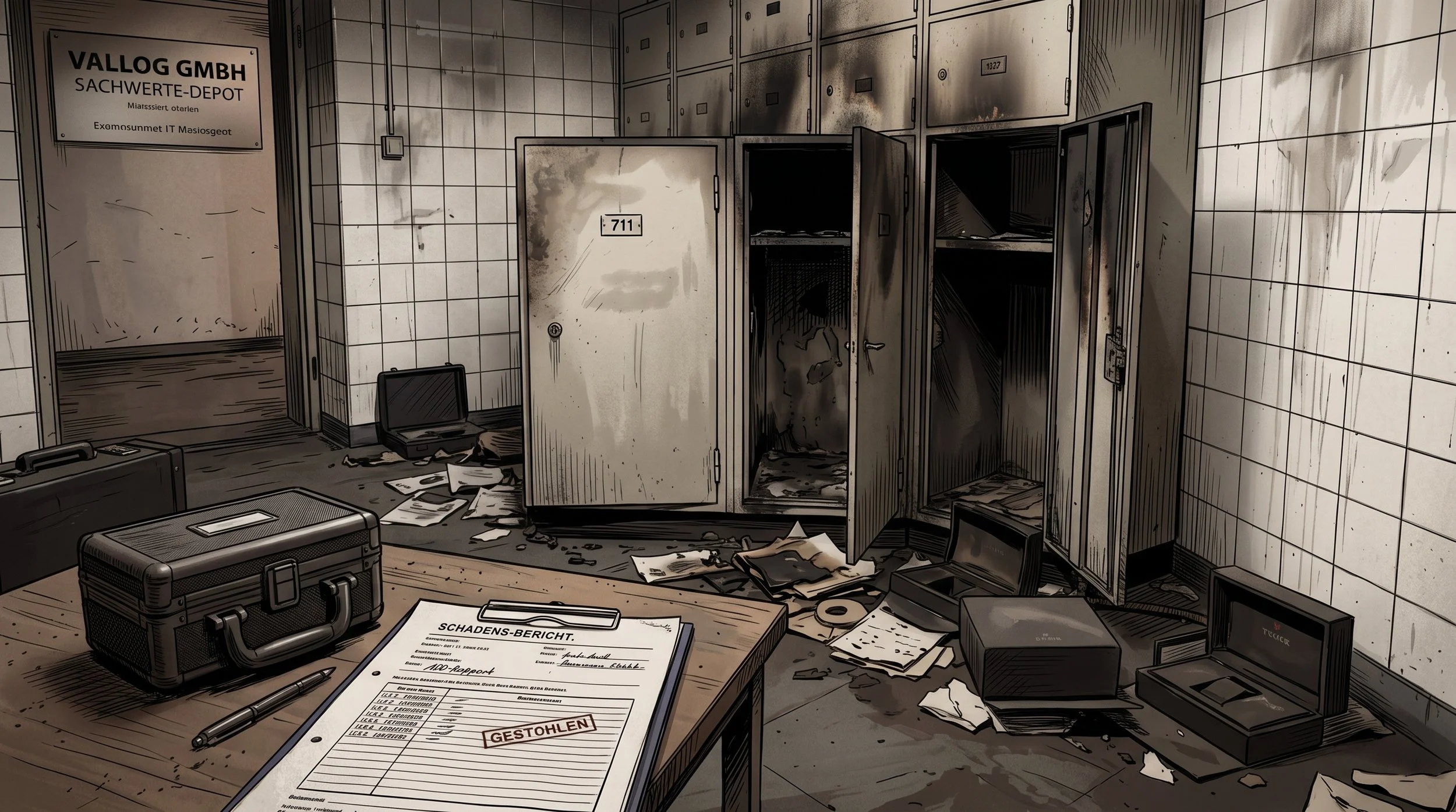
Image generated with Gemini
Berlin has a reputation for break-ins, so keeping a watch collection or anything particularly valuable in your flat can feel like an unnecessary risk, especially if you travel frequently. In the early years of this decade, however, there seemed to be few external storage options beyond the private vault operated at the time by Valvero Sachwerte GmbH on Fasanenstrasse. That is how my watches ended up there.
For an inhabitant of East Berlin, Fasanenstrasse is not particularly close. It took me around 25 minutes to get there using the Ubahn, but insofar as the watches were camouflaged in the backpack, the subway ride felt safe enough. Once there, Charlottenburg and Wilmersdorf are some of the hippest areas of the city.
I remember the vault being in a rather hard-to-find basement at number 77. The walls covered with white tiles, like the bathrooms in bad hotels. The security staff never struck me as particularly competent or diligent: Basically a bunch of near-retirees with moustaches, beer bellies and terrible manners. They once complained that I was taking too long to organize my belongings inside the locker room, which I interpreted as their imperious need to go on their lunch break (they always seemed to be on a lunch break). Still, customer service is not Berlin’s (or Germany´s) forte, so discourtesy alone was not a sufficient reason to reject what appeared to be the city´s only practical option for storing valuables. The facility felt safe enough until that 25thof November, when I flew from the Middle East to collect the belongings I had left in locker room 711.
On that day, when I arrived at the offices of Vallog there was a small sign that said something about some kind of incident in the vault. I was basically sent back home empty-handed by some lady who mentioned that I should talk to the police. That night, post@vallog.de sent a message that read something like this (translation from German is mine):
“On Saturday, November 19, 2022, an incident of damage occurred at our safe deposit box facility, Fasannstr. 77 in Berlin.
The investigation by the responsible State Criminal Police (LKA) and the damage assessment by the insurer are currently ongoing. The safety of the facility has been restored.
To determine the extent of your damage, please fill out the attached damage report and return it to us promptly.”
My arrival to Berlin came only a few days after the robbery, which added a particular cruelty to the timing: had I scheduled the pickup slightly earlier, I might still have my watches. Vallog initially said that not every safe-deposit box had been affected. The burglars had apparently targeted boxes rented by Watchmaster.com, an online watch dealer that later filed for insolvency. For a short while, that gave me hope that my watches might still be somewhere inside the vault.
On December 2nd, Kathrin Müller from Team Vallog GmbH confirmed that my locker room had been affected.
What seems to have happened?
The case remains murky, but reports and court materials describe a scheme involving Thomas Straub, Vallog GmbH’s owner and managing director. According to those accounts, Straub had incurred debts of up to $1.3 million to people associated with what is often called Berlin’s “clan milieu.” Reports also connected him with other sketchy ventures, including a gold-deposit business in which customers’ gold allegedly disappeared with unusual frequence. It seems that Straub helped the burglars gain access to the vault in order to settle his debt.
Apparently, the initial agreement was that the burglars would only steal from certain safety boxes that contained Watchmaster’s pieces, but as it happens when you do deals with the devil, the devils in questions decided to break-in into every single locker they could and then set the place on fire to cover their traces. Some reports claim that the total value of the “loot” goes as high as EUR 49m.
The initial hope that I got from Vallog may have been due to the fact that the thieves left some items from the safety boxes scattered on the floor of the vault. However, before and administrator was appointed, Vallog employees and the insurer placed the items in a separate secure room and in ten unrented and unbroken safe deposit boxes without any inventory effort. It is entirely possible that some of my stuff is or was in one of those boxes, but the administrator did mention that they were most likely covered in soot and potentially damaged by the fire.
According to letters that I received from Vallog´s insolvency administrator, the court documents state the following (translations from German made with Google Translate):
“According to Mr. Thomas Straub’s own admission during the main hearing in the criminal proceedings (Berlin Regional Court [LG Berlin I], Case No. (506 KLs) 255 Js 620/22 (15/23), he provided the other co-defendants with the information necessary for the burglary prior to the event (both verbally and via a USB stick; e.g., the building’s floor plan, the operation of the alarm system, insurance inventories, and video surveillance coverage). According to the criminal court’s findings, Managing Director Straub arranged for the actual security firm to be replaced by a sham security company (“Flash-Security”). On November 17, 2022, Managing Director Straub personally briefed the individuals allegedly employed by Flash-Security (including one of the charged accomplices) on the premises and the security mechanisms of the safe-deposit box facility. He also handed over and explained the operation of the various keys and transponders required to access the building and the underground garage, as well as to deactivate the alarm zones of the vault facility. On November 19, 2022, Managing Director Straub asked the managing director of Watchmaster not to activate the alarm for the Watchmaster area, claiming that construction work was scheduled for that day. Influenced by this deception, he had the alarm for the Watchmaster area deactivated following the conclusion of his visit on the late afternoon of November 18, 2022. Managing Director Straub knew that the break-in was scheduled to take place on November 19, 2022. On the morning of November 19, 2022, at 7:17 a.m., Managing Director Straub contacted the company Sicherheit Nord by telephone and—citing alleged construction work at the neighboring building—arranged for the deactivation of the alarm system for the safe-deposit box room until 8:00 p.m. that same day. On the day of the crime (November 19, 2022), one of the co-defendants used the key obtained from Managing Director Straub to open the access door; he then held the transponder—also obtained from Managing Director Straub—against the corresponding panel next to the door and entered the building. Once inside, following instructions he had noted down on a slip of paper, he deactivated the individual alarm zones of the vault facility one by one, and opened it using transponders and numerical codes to pass through the doors along the way, and proceeded to the reception area. Following the arrival of additional accomplices and tools, the accomplices spent hours breaking open the safety deposit boxes—with one person positioning a screwdriver while the other forced the box open using a crowbar—and emptied the boxes completely. The accomplices forcibly broke open a locked door leading to the front of the two rooms rented by Watchmaster, using crowbars, and took possession of 996 wristwatches. At approximately 7:30 p.m., they set fire to the safety deposit box room by dousing car tires, papers, and inventory from the facility—which had been brought in earlier that morning—with gasoline and igniting them. According to the confession made by Mr. Thomas Straub during the main hearing—as recounted in the judgment—“the charges are correct and true in all respects”
The court proceedings and the insurers refusal to cover the costs
Vallog had no other choice than to file for insolvency and it is probably a safe assumption that Mr. Straub hid any seizable assets before the crime took place, so the only hope for the tenants of the safety deposit boxes was the alleged insurance policy that Vallog kept on behalf of its customers.
There were at least two insurance policies kept with Mannheimer Versicherung: One covered the vault and the property and the beneficiary was Vallog itself. The other one was a policy that Vallog took for the benefit of the tenants of the safe deposit boxes with a coverage amounting to EUR 30000.
With regards to the first insurance policy, it doesn’t take a lawyer to establish that any insurance claims made by Vallog are rather spurious. After all, it was its managing director and owner who conspired with organized crime to perpetrate the robbery, so any insurance law regime worth existing would impede the policyholder to claim an insurance benefit for a robbery incident that it caused to itself. In the words of Beiten Advant, the law firm that was engaged by the administrator to advice on this matter:
“According to the prevailing view in case law and legal literature, the intentional causation of an insured event constitutes a (subjective) risk exclusion; that is, the risk in question is not covered from the start (Translations from German are mine)(…)”
The second policy raises a more difficult question. Customers like me entrusted our valuables to Vallog, played no part in the crime and understood our contracts to include insurance protection. Vallog’s wrongdoing may defeat any claim it could make for itself, but it does not automatically explain why it should affect the legal standing of claims by innocent insured customers. Nevertheless, Beiten Advant also took a pessimistic view:
“In the present case, the occurrence of an insured event is likely absent from the outset, as the prerequisites regarding the intentional causation of the insured event—set forth in (…) are met. According to the prevailing view in case law and legal literature, the intentional causation of an insured event constitutes a subjective risk exclusion; that is, the risk is not covered from the start (….) Even if one were to follow the opposing view and classify the intentional causation of the insured event merely as a “breach of contractual obligation”, the result remains the same. In that scenario, an insured event would indeed exist, but the insurer could invoke an exemption from liability due to the intentional breach of obligation.
Even though the loss of the insurance claim (…) economically affects the safe deposit box holders, these principles apply in the present case as well. If the policyholder has intentionally caused the insured event, this also affects the claims of the persons insured pursuant to §§ 43 et seq. VVG (in this case: the safe deposit box holders). The insurer (Mannheimer Versicherung AG) is likewise released from its obligation to provide coverage vis-à-vis these parties, as the insured cannot be entitled to rights extending beyond those of the policyholder” (Translation to English is mine).”
And so, I am no expert in insurance law, and I am not familiar with the court decisions that Advant Beiten relied on. But something is amiss here. If the main argument for releasing Mannheimer from its obligations vis-à-vis the safety box tenants is that they (as insured persons) cannot be entitled to rights extending beyond those of the policy holder, Advant Beiten would need to explain how is it that making an insurance claim in good faith is equivalent to claiming a right beyond those of the policyholder. To be clear, whatever “rights” the policyholder (Vallog) had under the policy are clearly extinct due to its participation in the criminal enterprise, but the claims exercised by insured persons who had no involvement in the crime do not go beyond the rights of the policyholder, they amount to exercising equivalent rights to those that the policyholder extinguished for itself by means of its wrongdoing.
Again, this is not the place and I do not have the expertise to develop a comparative theory on the legal treatment of good faith insurance beneficiaries, but a preliminary review suggests that in the UK and in the US (a notoriously pro-insurance jurisdiction) there are at least two legal doctrines that would protect individuals who are in the same “innocent” position than the tenants of Vallog’s safety boxes. In the US, for example, the Innocent Co-insured Doctrine that is well established since the 1980s views insurance obligations as separate and severable as opposed to joint. Under that approach, an insured party’s wrongdoing does not necessarily taint an innocent party’s claim, and the innocent party may recover its share of the proceeds. Mind you, Straub and Vallog were not even co-insured under the second policy, Vallog was the policyholder, which makes the tenants’ legal position even more distinct.
Under English Common Law, on the other hand, the outcome for an innocent third party depends entirely on whether the insurance in Joint or Composite. If the parties have an inseparable, undivided interest in the property, the insurance is considered joint and the wrongdoing of one insured person voids the policy for all. However, if the parties have separate, distinct legal interests in the same property (such as a policyholder and a third-party beneficiary, like the Vallog safety box tenants), the policy is classified as composite and English courts would treat it as a bundle of separate contracts.
I find it difficult to accept that German law offers no route to a comparable result. It is not entirely surprising that it favours predictability and the protection against systemic moral hazards (If insurers were forced to pay third parties despite the policyholder's intentional crime, wrongdoers could orchestrate massive frauds knowing the financial fallout for their clients or partners would be covered by the insurer) but the outcome suggested by Advant Beiten appears profoundly inequitable for the insurance regime of an advanced jurisdiction. Given that the court decisions cited by the firm date from 1964, 1965, 1978 and 1986, my intuition is that nobody has had the bravery and resources to retest this doctrine before the higher courts under the light of the right case. This is certainly my scenario: I have already spent nearly EUR 15k in legal fees trying to recover from the insurer, and I suspect most of the individuals who lost their valuables in the robbery are in a similar position. The sad part is that German Law seems to enableinsurers to void the policy coverage for good faith insurance beneficiaries by virtue of some kind of vicarious liability where the wrongdoing of others is attributable to them. Here is an excerpt of the letter sent by the insurer to Vallog’s insolvency administrator:
“This conduct on the part of the policyholder’s managing director results in a complete exemption from the obligation to provide benefits on the part of Mannheimer Versicherung AG regarding any and all claims for benefits under the insurance contract—whether made by the policyholder itself or by any additionally insured persons— arising from the loss event of November 19, 2022.
Please notify all safe deposit box holders of this regulatory decision. It is binding upon them as well, because they must accept that the conduct of the policyholder’s managing director—who intentionally caused the insured event—is attributable to them (given that he acted on behalf of the contractual counterparty to their safe deposit box agreement)”
To add insult to injury, Mr. Straub and the other criminals received sentences that are ridiculous for a robbery that involved valuables worth in the excess of EUR 40m. The two men identified in reports as the direct perpetrators, Muhammet H. and Kenan S., received sentences of eight and seven years, while Straub received three years and six months after serving as a key witness for the prosecution. If granted parole after serving two-thirds of his sentence, he could be released after roughly two years and four months. In other words, German criminal law seems to send the signal that thieves are better off going big in their criminal enterprises: Assuming that Muhammet H made some EUR 5 million out of the >40m loot and that he serves his full sentence (both of which are conservative assumptions) he may have just gotten an incredibly sweet deal. Hell, for five million Euro, I would consider going to jail for a few years.
For ordinary customers, the outcome is devastating: the valuables are gone, the insolvency offers little prospect of recovery, the insurer denies liability and litigation is prohibitively expensive. Whatever one thinks of the legal reasoning, an insurance regime that leaves innocent victims bearing nearly the entire loss deserves closer scrutiny.
What are the lessons learned for watch collectors from the Vallog episode?
Conduct serious due diligence on both the vault operator and its owners before entrusting them with your collection. This is a painful lesson for me because I have worked in anti-money-laundering, where counterparty checks and adverse-media searches are routine. Had I run even a basic search on Thomas Straub and Valvero/Vallog, I might have thought twice about leaving my watches with them for so long.
In Germany, consider taking out a policy directly for your collection rather than relying exclusively on insurance arranged by a safe-deposit-box operator. As my experience shows, the operator’s wrongdoing may jeopardise claims made under a policy it purchased for customers.
Mannheimer Versicherung doesn‘t seem like a particularly good insurer. It appears too ready to find all kinds of arguments, including very questionable procedural hurdles to avoid honouring insurance claims. I do hope that the guys at Timeless Investments are able to defeat them in court. They keep an up to date chronology of the developments of their case here.
Use lawyers with genuine insurance-law expertise. Although I am a lawyer myself (albeit not a German lawyer) I spent around EUR 15,000 on advice from a firm that took at least six months of email correspondence to conclude that my case had little prospect of success and would be uneconomical to pursue. I will not name the firm here, but other victims who want to understand my experience may contact me in the comments.
My losses – Including the serial numbers, so that whoever has them has a harder time reselling them
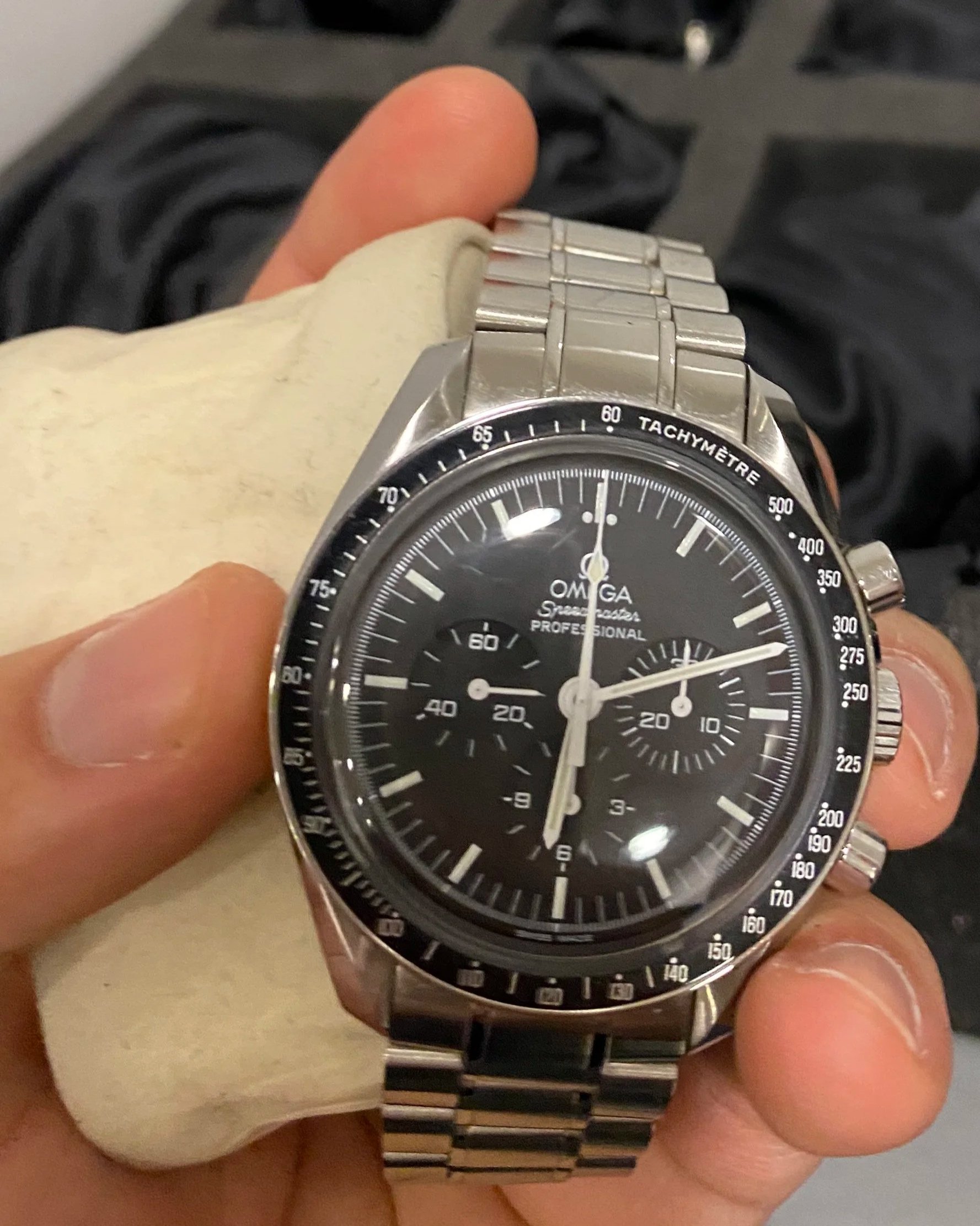
1. My Speedmaster Professional – Ref: 35705000
Watch Number: 77796304
This was my first ever serious watch. It had tremendous sentimental value because it is the one that started my collection and the one piece that I always dreamed of when I was a kid.
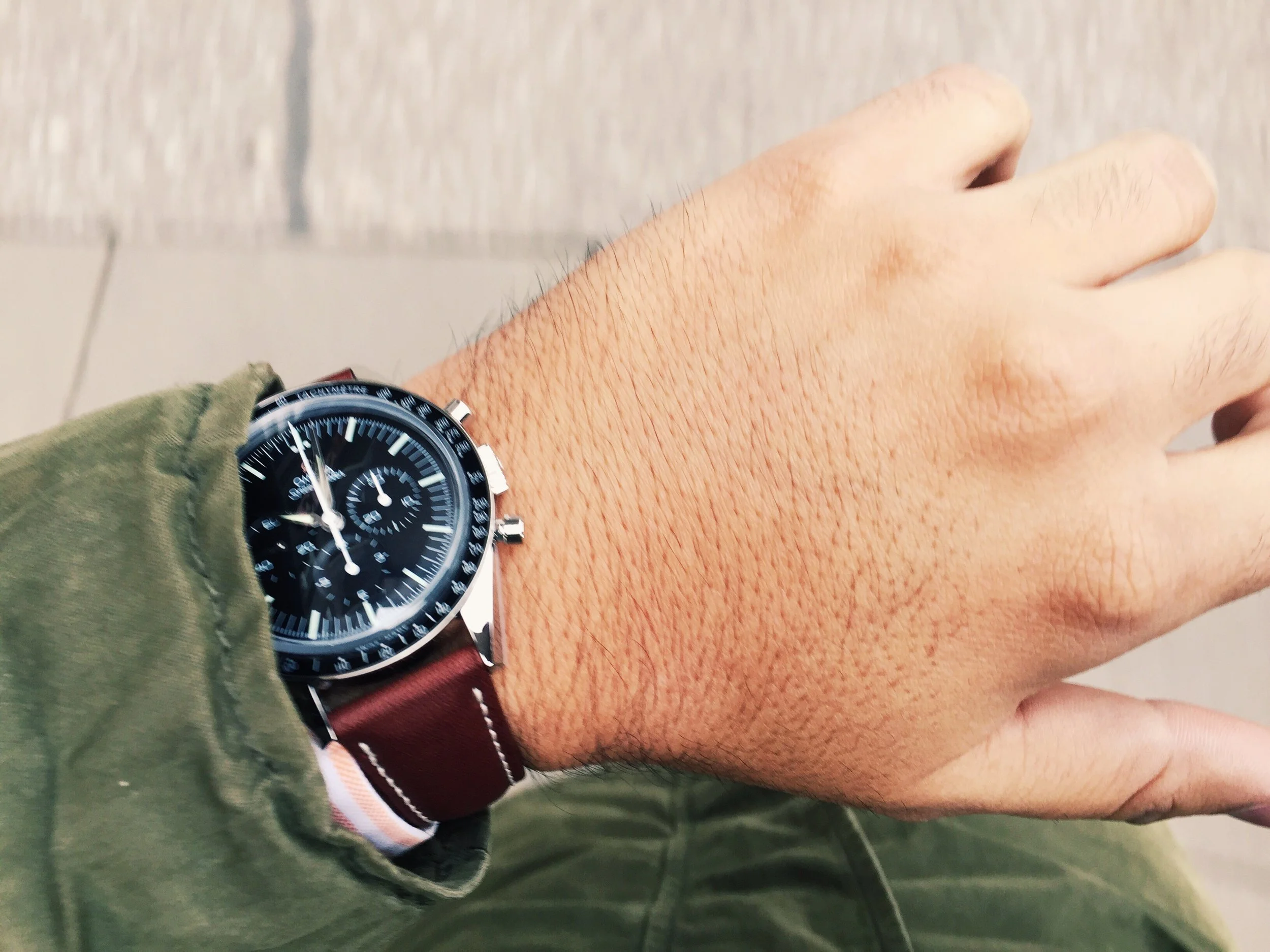
2. My Speedmaster First Omega In Space (Mark I) - Numbered edition: 5970
Watch Number: 78745081
I loved this piece and wore it very often. I bought it directly from the boutique at an incredibly good price and it was a numbered edition. I will always remember the number (5970) because I thought of it as some kind of premonition of the watch I will buy one day from Patek.
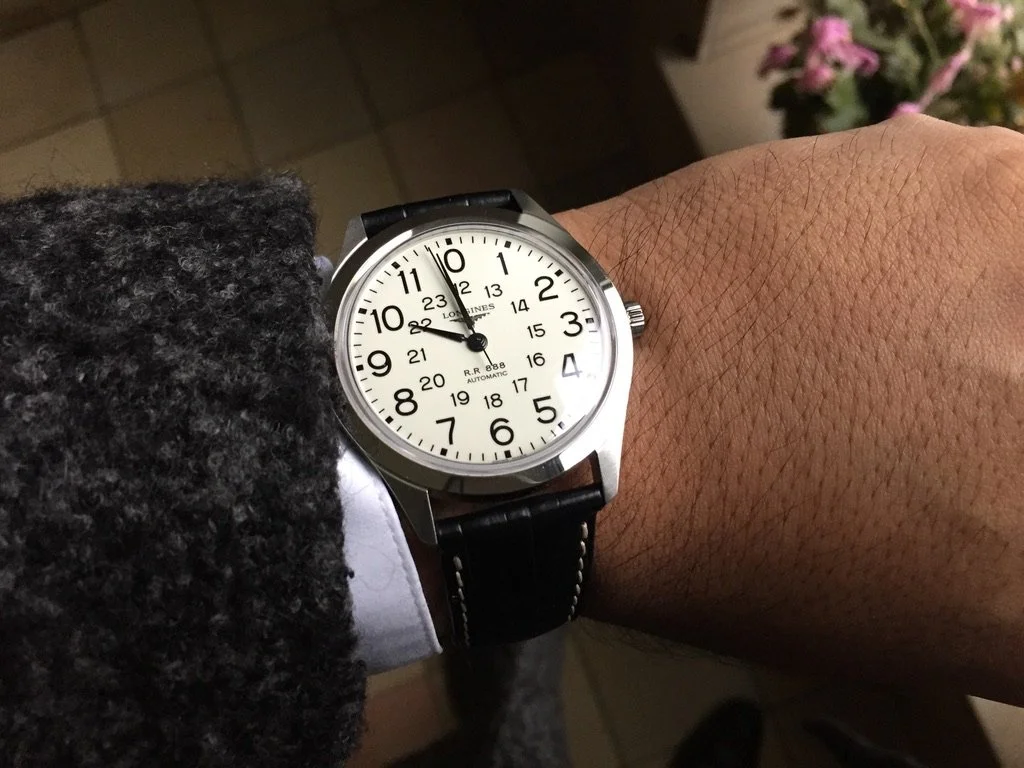
3. My Longines Railroad – Ref LO560014-35431
Individual watch number: 44793811
This was a rather inexpensive time only watch, but I really liked the understated yet unique ivory-colored dial. Under EUR 2000, including a very high quality alligator strap, it was one of those great deals that Longines offers from time to time. I think it may become collectible, because it seems to have been produced for a maximum 2-3 years. I was planning to gift it to my father.
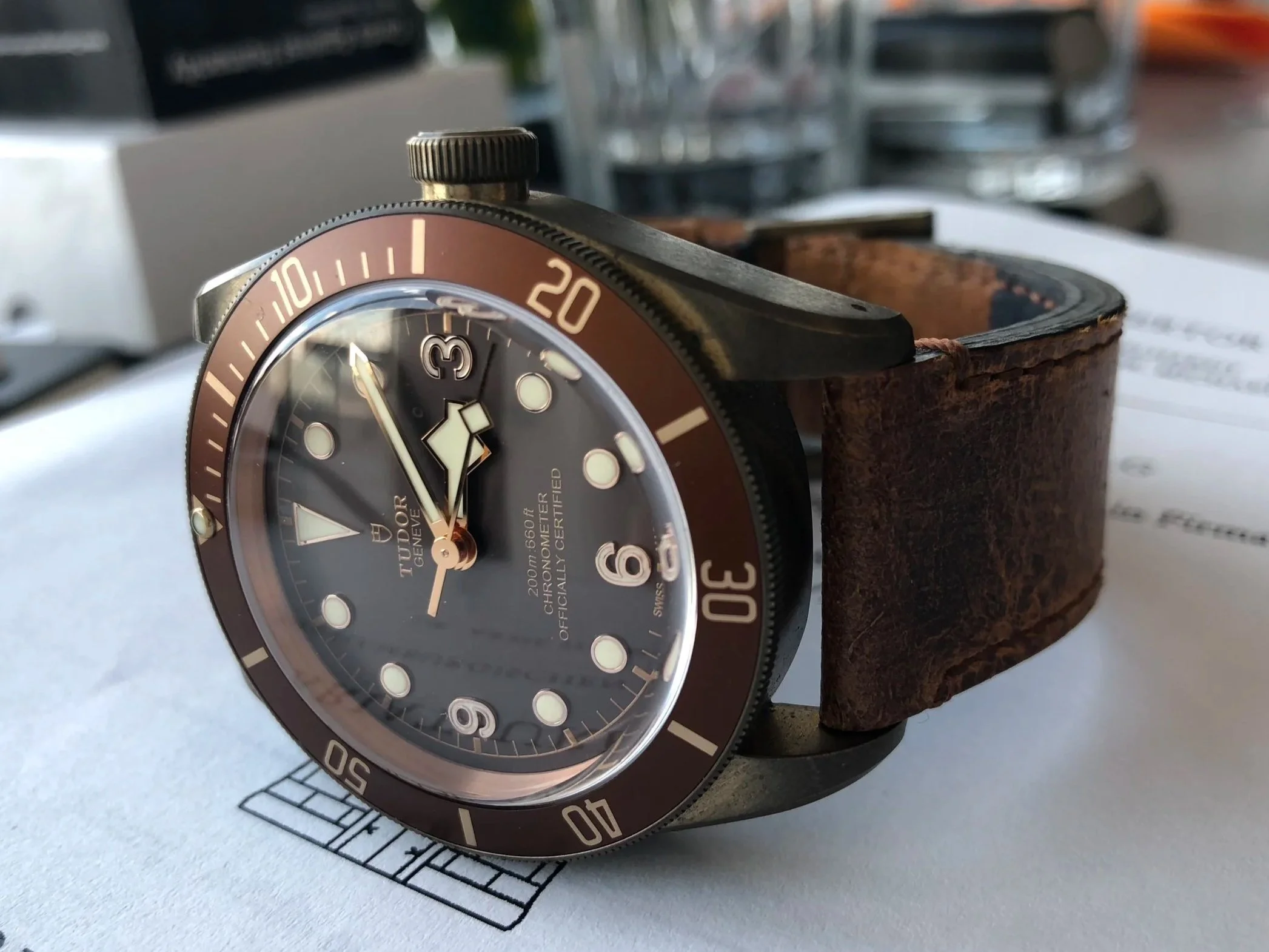
4. My Tudor Black Bay Bronze (Mark I) - 79250BM
Serial Number: I691298
This Tudor was probably one of my most worn daily drivers. The bronze case had the patina of many trips around the world. I like it so much that I purchased it again.
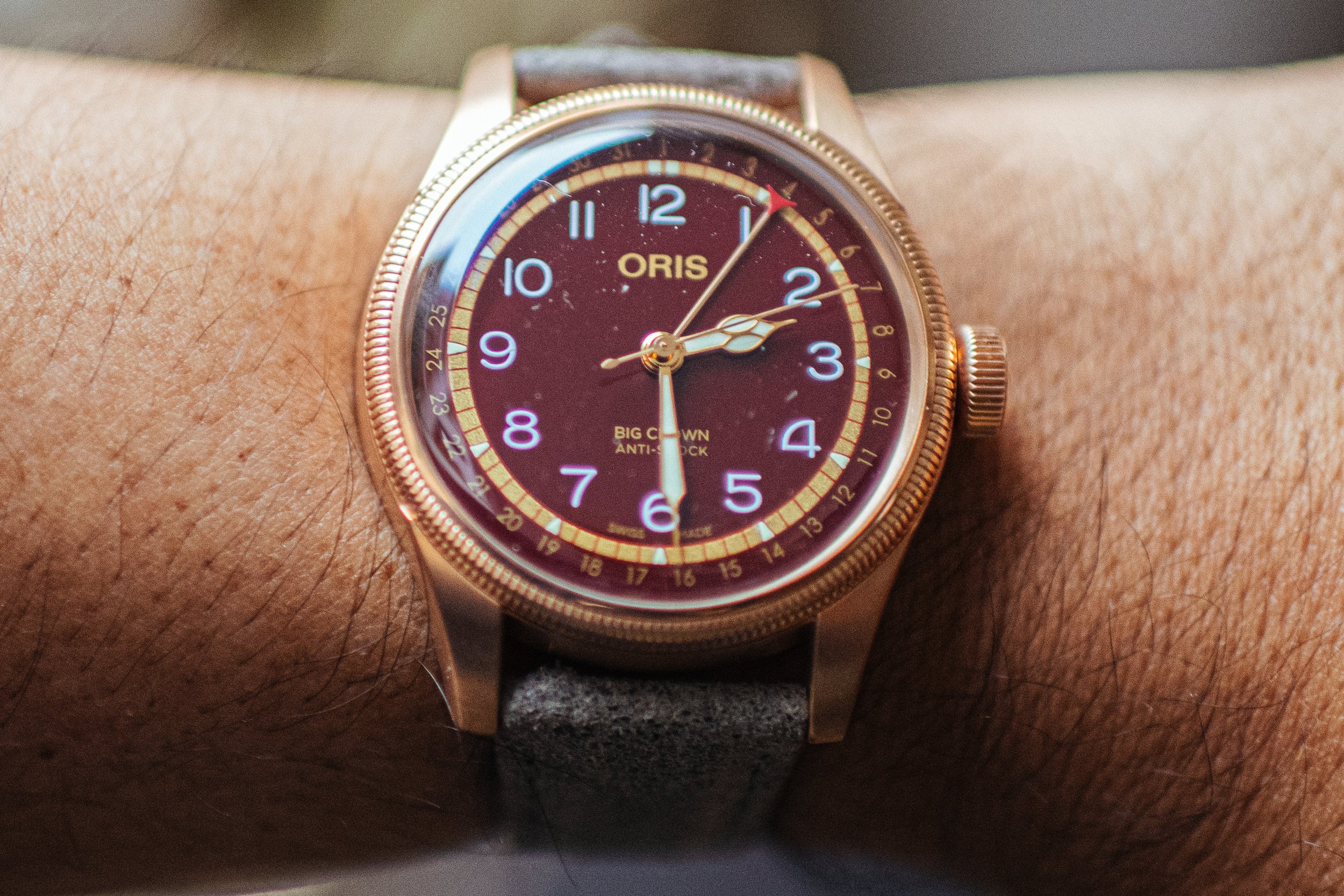
5. My Oris Big Crown Fratello Limited Edition (Fratoris) #86 - 0175477413188
Serial Number: 3896878
This watch was rather inexpensive but is basically irreplaceable. It was a 300-piece run made in bronze with an incredibly beautiful oxblood-red dial decorated with gilded numerals. I managed to convince the folks at Fratello to send me the one that corresponded to my birth year: Number 86. I loved the pointer date and the 40mm case size with a fluted bezel, so I used it to wear it to the office very often. It is one of the hardest losses to swallow from the whole incident and I would be ready to beg Fratello/Oris to allocate another one to me. If Oris were to make a Big Crown in this size and colour with one of its new inhouse movements, I would be the first one in line for it.
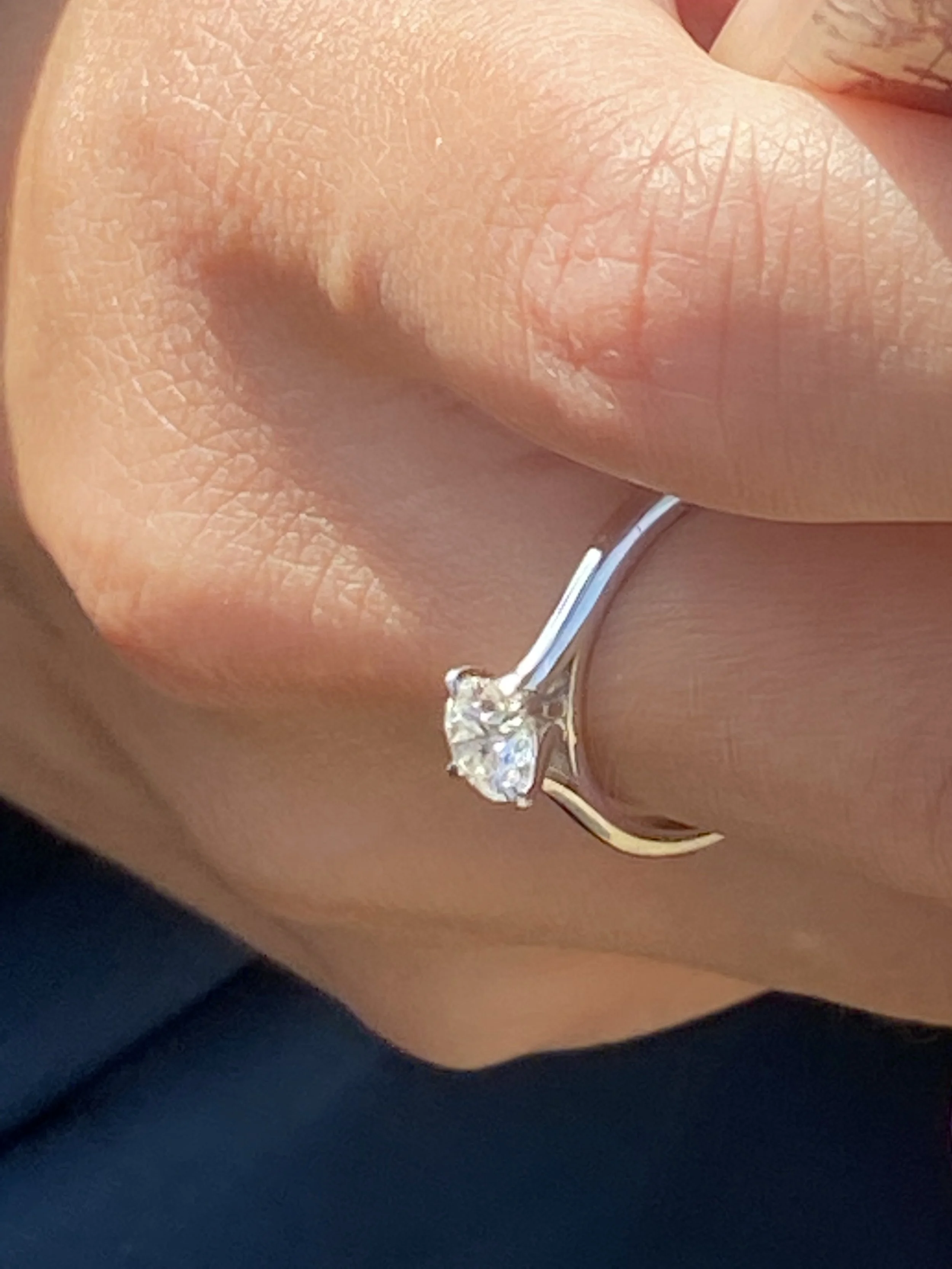
6. A Bucherer solitaire 0.8ct F – vvs 1 Diamond engagement ring
I will not disclose the diamond’s GIA number here. The ring had been returned to me by a fiancée after our engagement ended. I was still deciding what to do with it, but I could not bring myself to sell it or give it away. Its value to me was not merely financial.