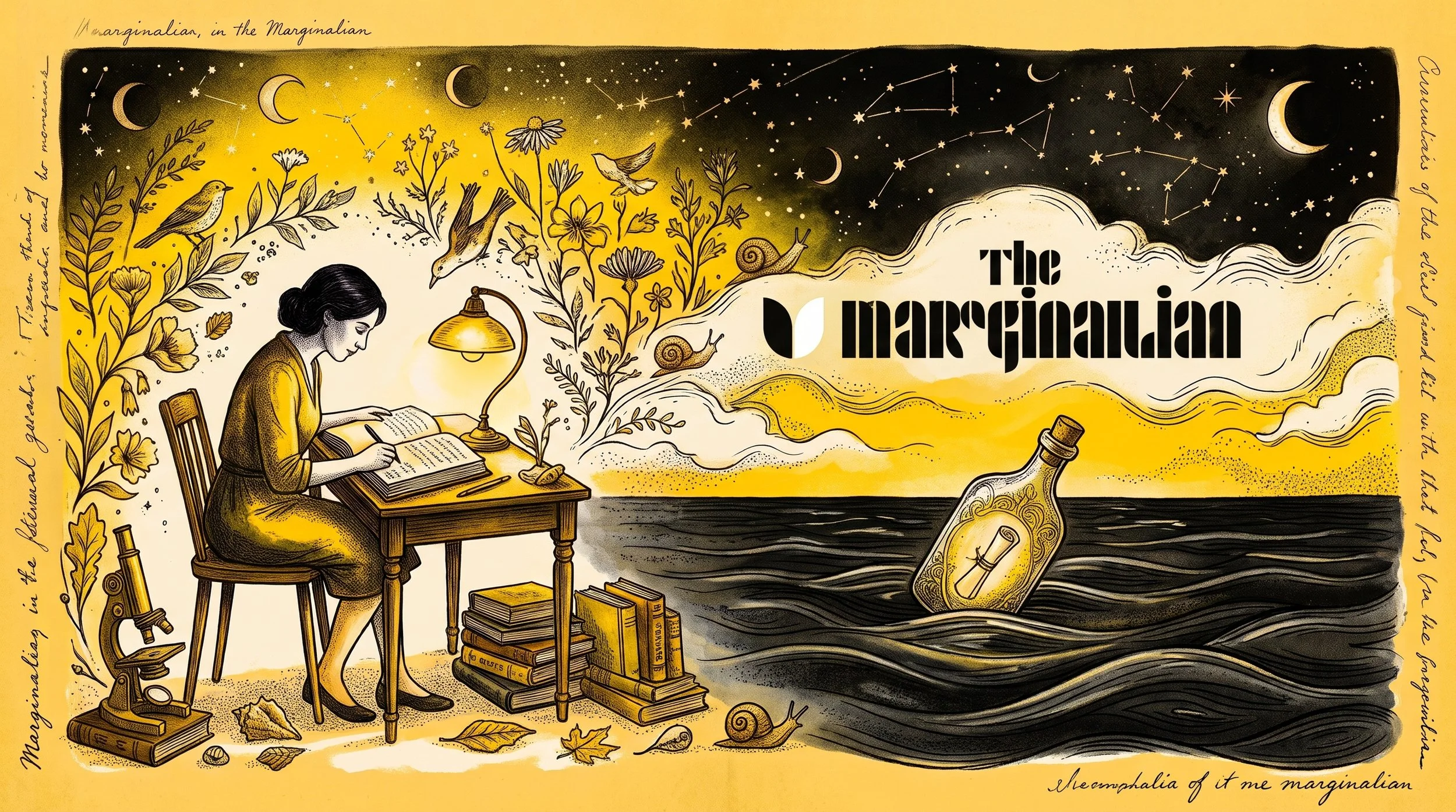
Illustration generated using Gemini
The Marginalian is inspiring. I remember stumbling upon it many years ago thanks to the wizardry of one of the algorithms, back when the algorithms were not just the amplifiers of outrage that they seem to have become. It was born under the name Brain Pickings, but its author decided one day that the name had been outgrown, that it "neither fits nor foments the private well of wonder from which it all springs."
I used to think of it as a careful exercise in curating the world: beautiful ideas and texts and art, all accompanied by an intelligent feminine voice that always seemed to speak in words of contagious amusement. As if trying to remind us that all those things really mattered. As if trying to remind herself.
Twenty years after it was born, it is one of the blogs that I most admire on the whole internet. Let's keep in mind that it is a pre-Substack (and pre-GenAI) survivor from the days when blogging was trendy, and that it is an English-language publication written by a Bulgarian immigrant, in "whose ear the tired puns and idioms of a non-native language rang fresh and full of wonder." In many ways, its continued existence and its consistency vindicate the whole notion of blogging. If I wished my own blog was more like any other blog, The Marginalian is what comes to mind.
Maria Popova's voice is intimate, smart, sensitive and full of awe. Through it I have discovered and rediscovered many authors, thinkers and artists, and their most inspiring work. And yet her labor of love is not exhausted by this curatorial effort; it is literature in its own right, in its truest form: very careful accumulation.
Writing blog posts is mostly a lonely activity akin to throwing bottled messages into the ocean. This is why I partially agree that her work is marginalia, even if it revisits the work of some of the most acclaimed thinkers in history. I know of few people besides Maria who have dared to make a living out of it. So it is equal parts labor of love and act of bravery: it is offered free and without advertising, relying only on donations. In her own words:
““Every month, I spend hundreds of hours and thousands of dollars keeping The Marginalian going. For two decades, it has remained free, ad-free, AI-free, fully human and alive thanks to patronage from readers. I have no staff, no interns, not even an assistant — a thoroughly one-woman labor of love that is also my life and my livelihood.””
For a corporate sellout like myself, it was incredibly inspiring to see it included in the Library of Congress's permanent web archive of culturally valuable materials. The episode made me wonder what if? What if I were braver and weren't so fond of fine things?
I suppose that The Marginalian is such a beautiful and important little corner of the internet because it reminds us, with incredible kindness and respect, of all the beautiful possibilities that make up the human experience, whether they are embodied in paintings, in words that add up to poetry or in carefully honed ideas. It is so compelling because it seems to make the point that throwing bottled messages into the ocean is not so futile after all. That some messages are worth the trouble. That the means justify the ends, not vice versa.
Some of my Favorite Posts
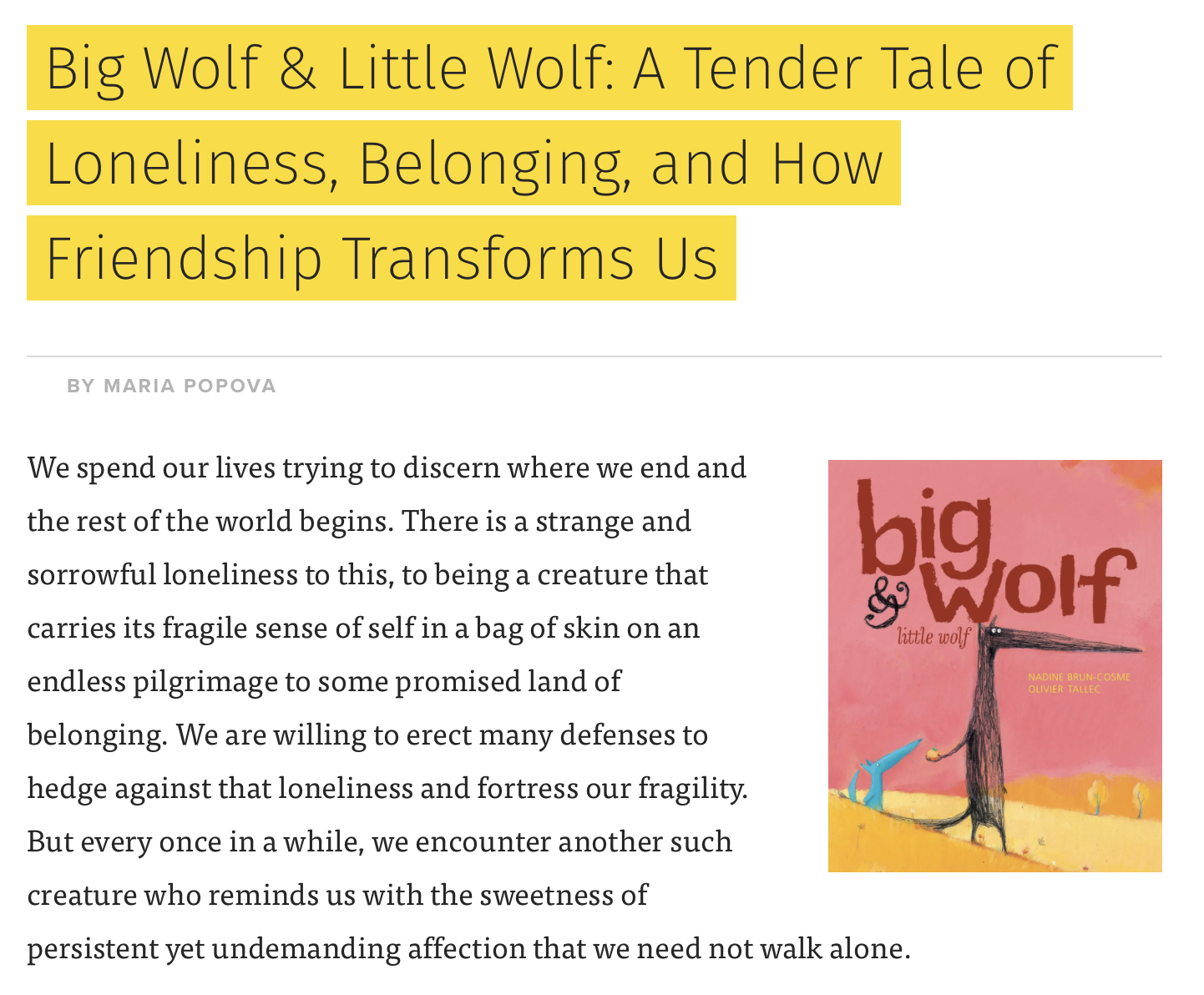
This one about Nadine Brun-Cosme’s fable about friendship, wonderfully illustrated by Olivier Tallec
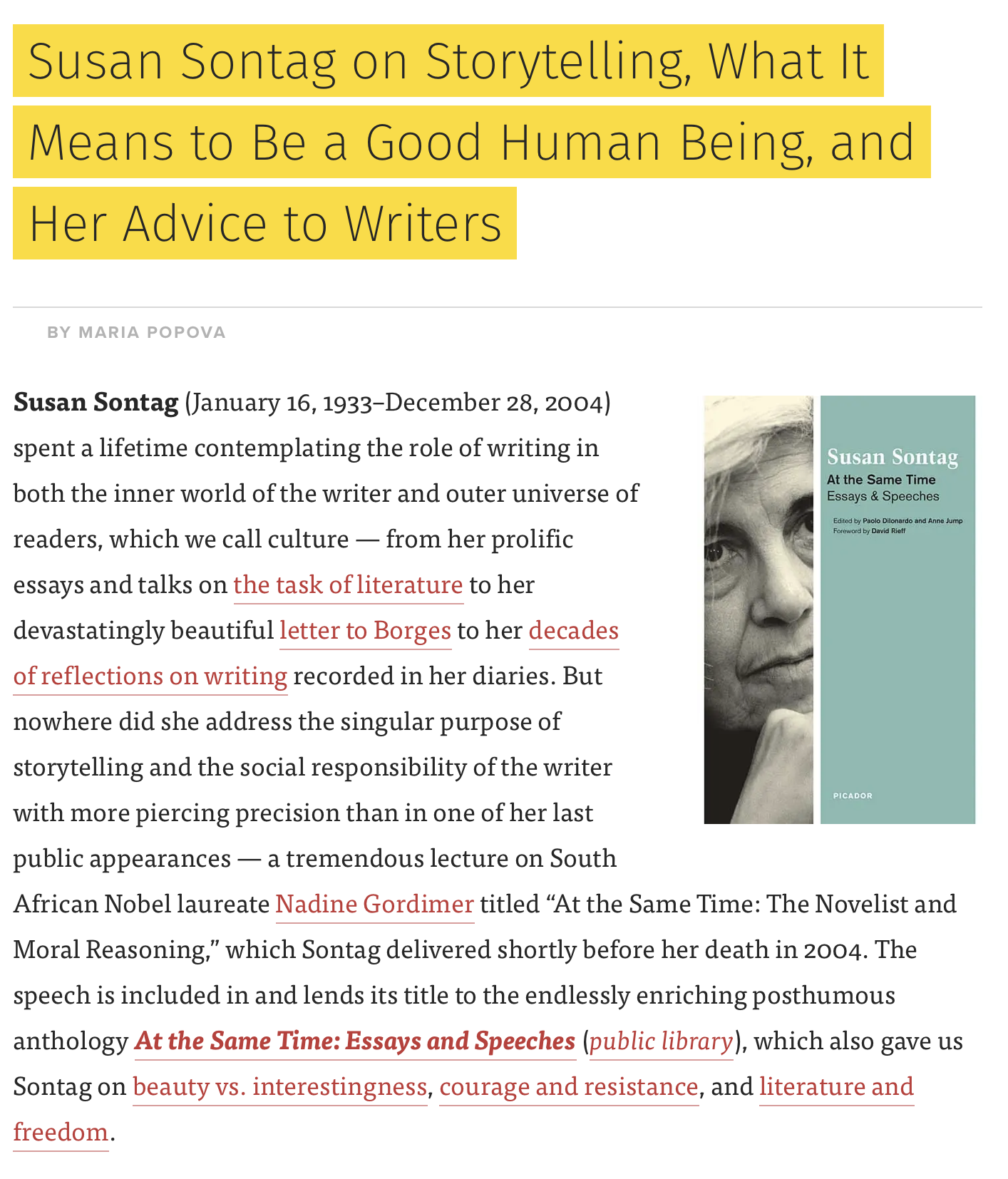
This one about Susan Sontag on writing because everything that Susan Sontag has to say about writing is important.
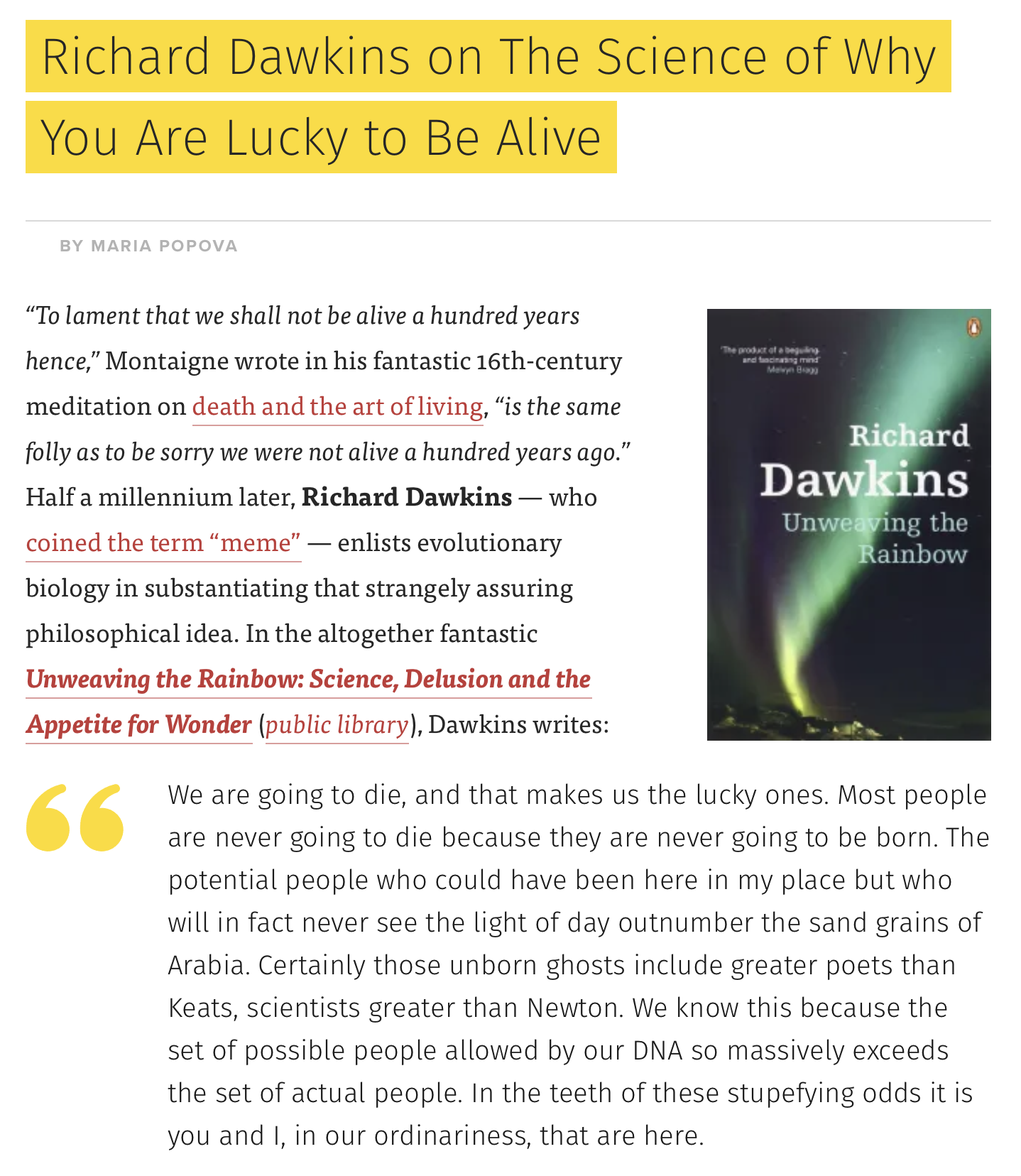
This one about Dawkin’s apparent insistence on the poetry within scientific truth
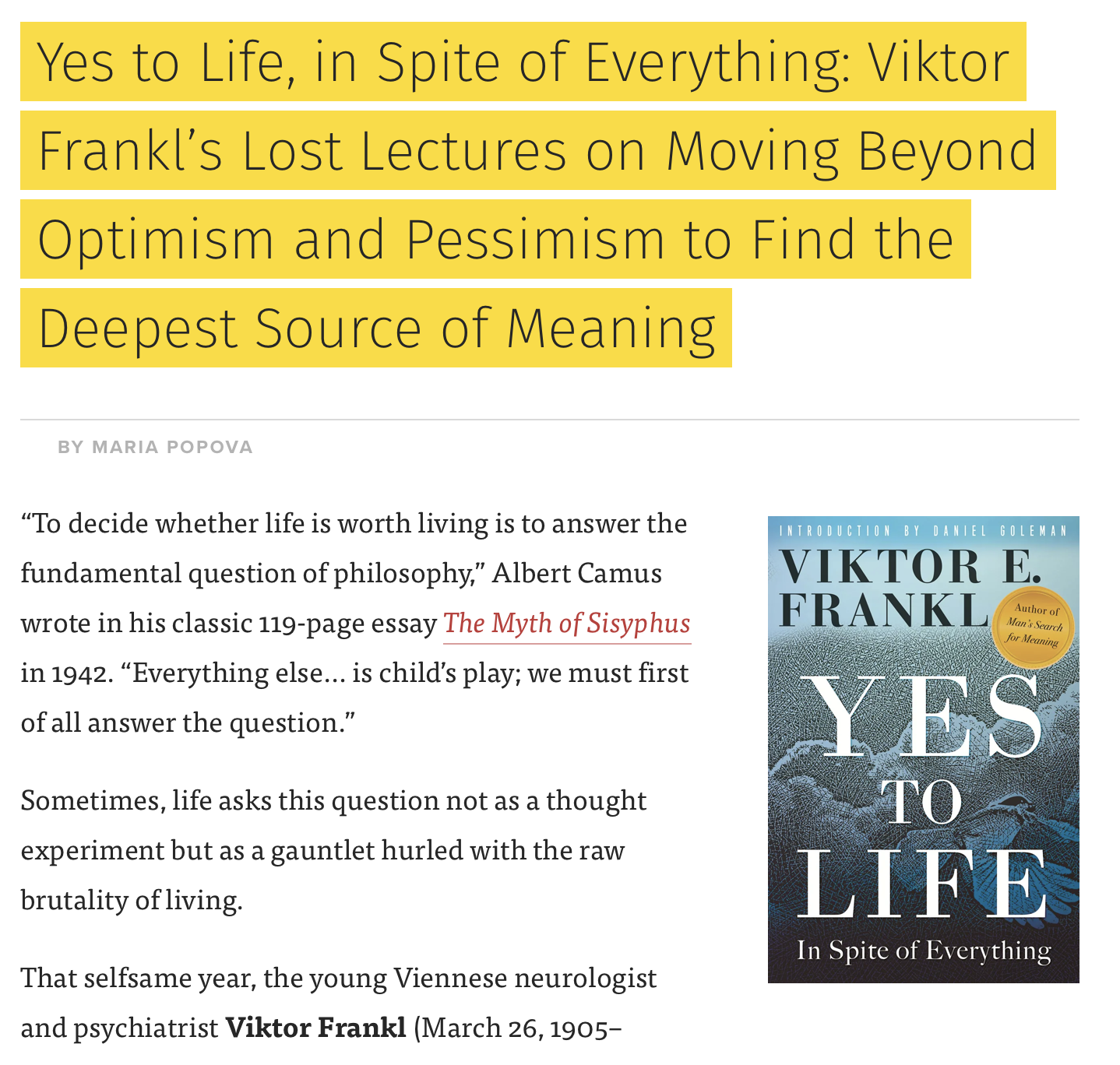
This one about Viktor Frankl’s answer to the question of whether life is worth living, after losing his family in Auschwitz and surviving the horrors of the camp.