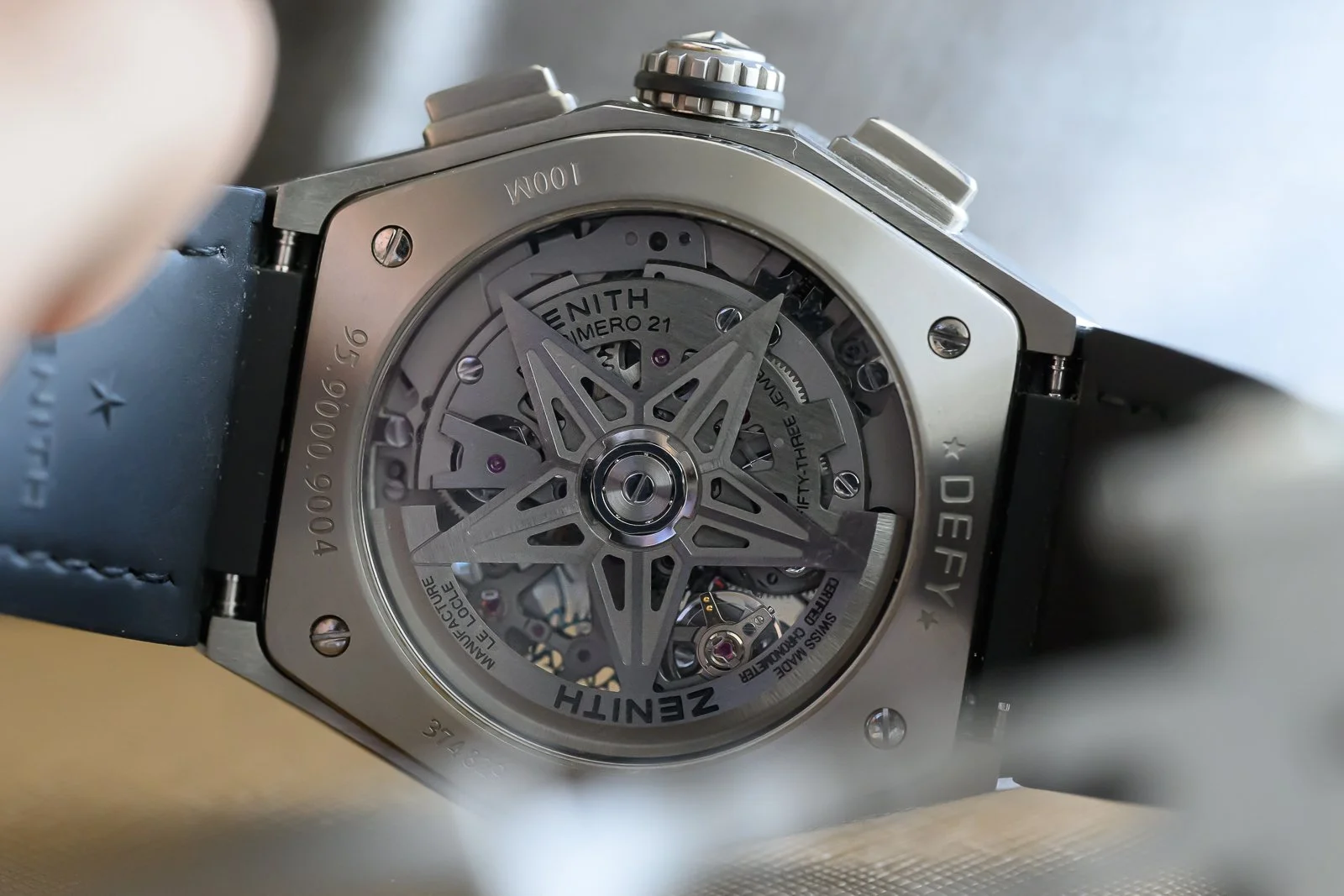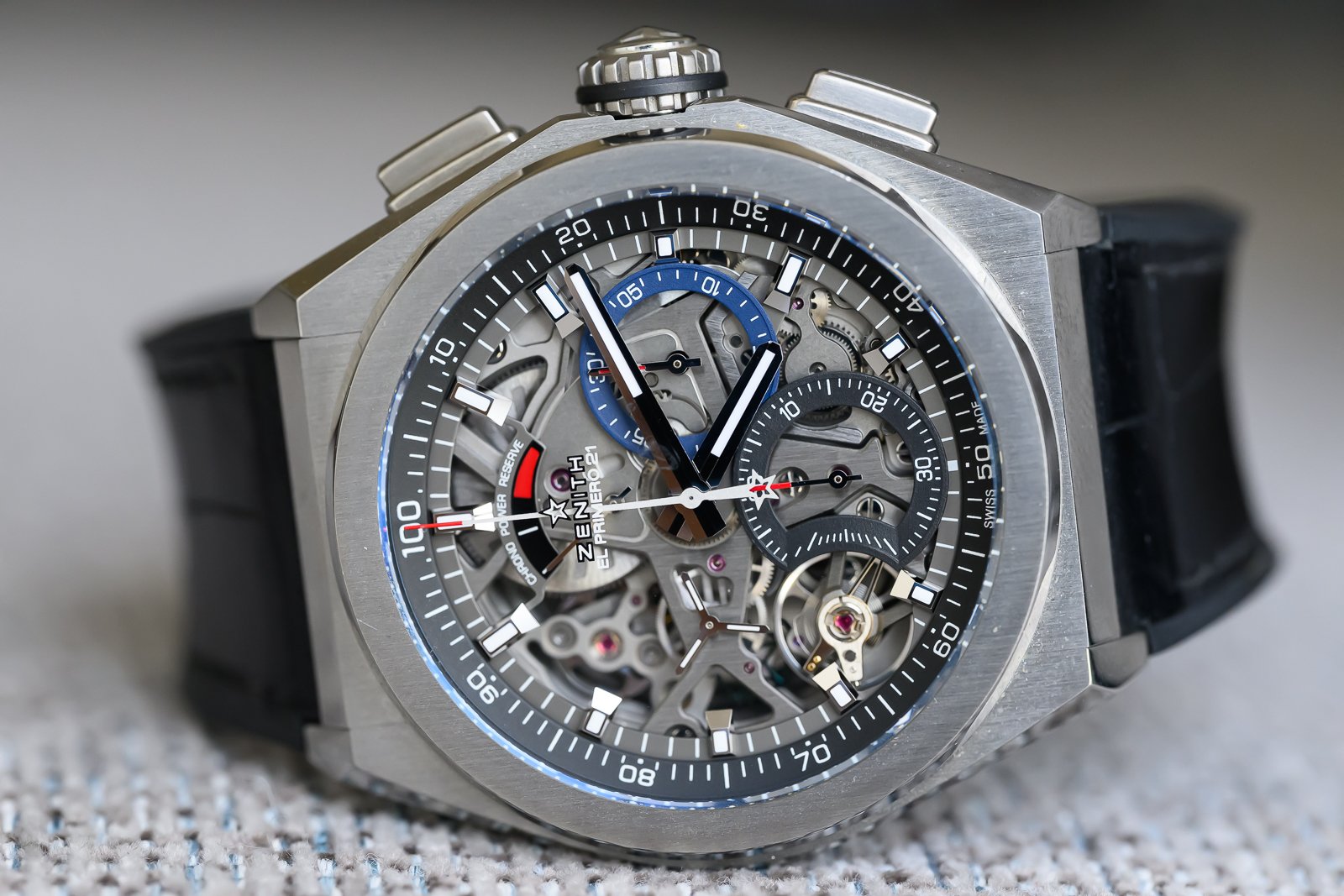
I remember falling in love with the El Primero 21 Chronograph from the moment it was announced. I had been thinking about adding a Zenith El Primero to my collection for a long time, and this one seemed to add a few things that were missing: it would be my first Zenith, it would be my first El Primero, it would be my first skeletonized dial, it would be my first high-beat chronograph and it was originally announced to feature a newly patented escapement technology.
The promotional video from Zenith was particularly enticing: It showed a sharp trapezoidal case that combined the matte finish of titanium with the splendor of a tastefully skeletonized dial, it highlighted a beautifully rendered Zenith-star-shaped rotor (this was one of the first things that caught my eye), and it paired all of that with a very elegant black rubber and alligator-leather strap. I remember sending an email to my trusted watch dealer at Juwelier Becker on the very day of its introduction.
My example was probably the first one that ever made it to Hamburg some time in January 2018. I remember running to Becker when I heard that it had arrived. Like almost every watch I had seen in pictures and videos before the purchase, it felt slightly different in the metal: The case did not feel as sharp, but most of the awesomeness was there. I remember my first impression being how light it felt on the wrist despite its size.
Some questions did arise: It is a rather chunky watch at 44mm, which made me wonder whether my puny wrists would be able to wear it without looking like I had borrowed my older brother's watch. Moreover, the watch was released at a time when the hatred for Hublot was already commonplace in certain factions of the watch community. The fact that it was thought of as a brainchild of Jean-Claude Biver, who was then at the helm of LVMH's watch division and was accused of Hublotizing Zenith, gave me some pause. Every single connoisseur seemed to be ready to remind everyone about the flop of some earlier generation of Defys that featured such gaudy design elements that they ended up harming Zenith's brand equity. The pictures seem to make a good point about how ugly these things were.

The Defy Xtreme Open El Primero (Ref. 96.0528.4021)
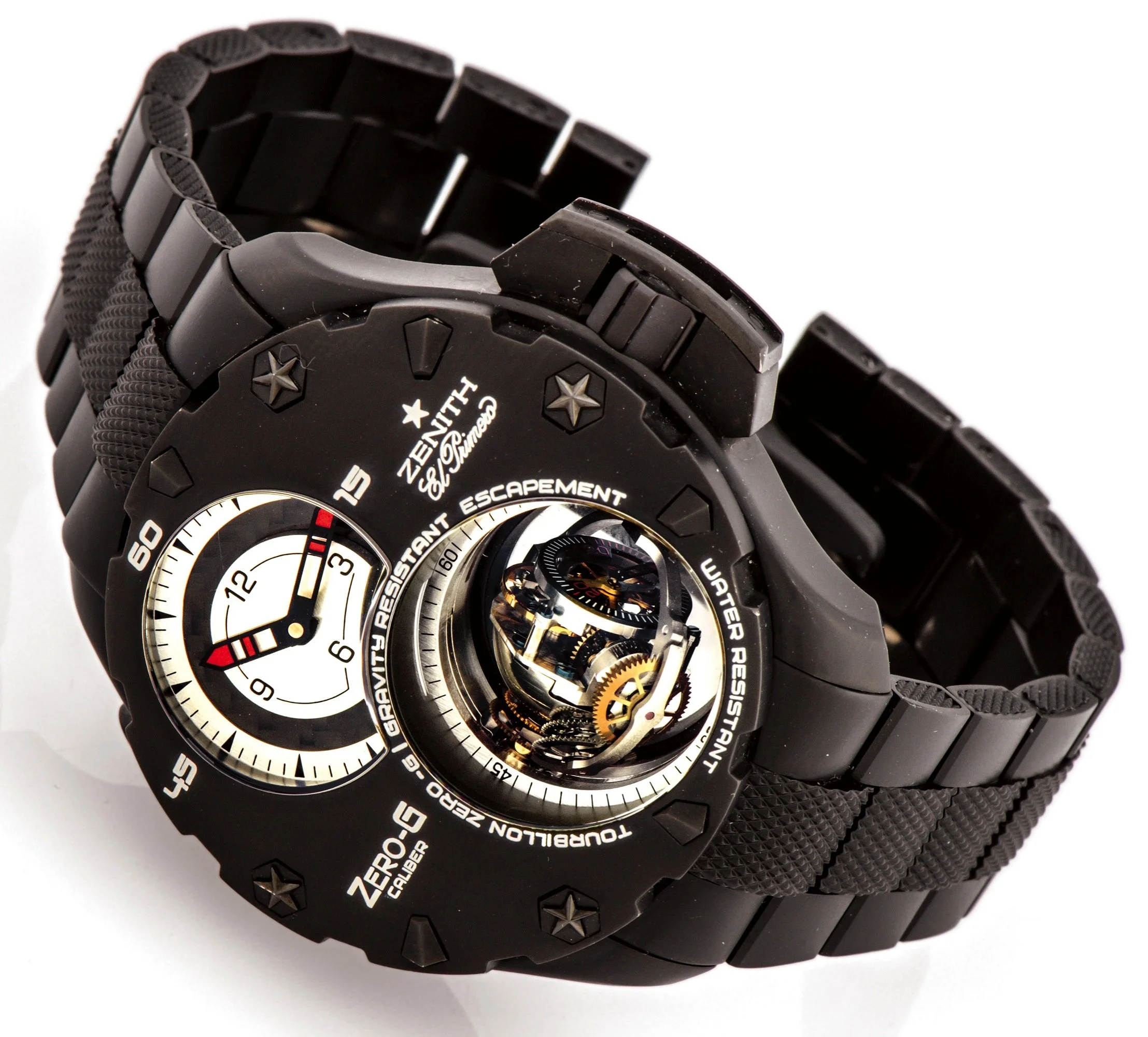
The Defy Xtreme Tourbillon Zero-G
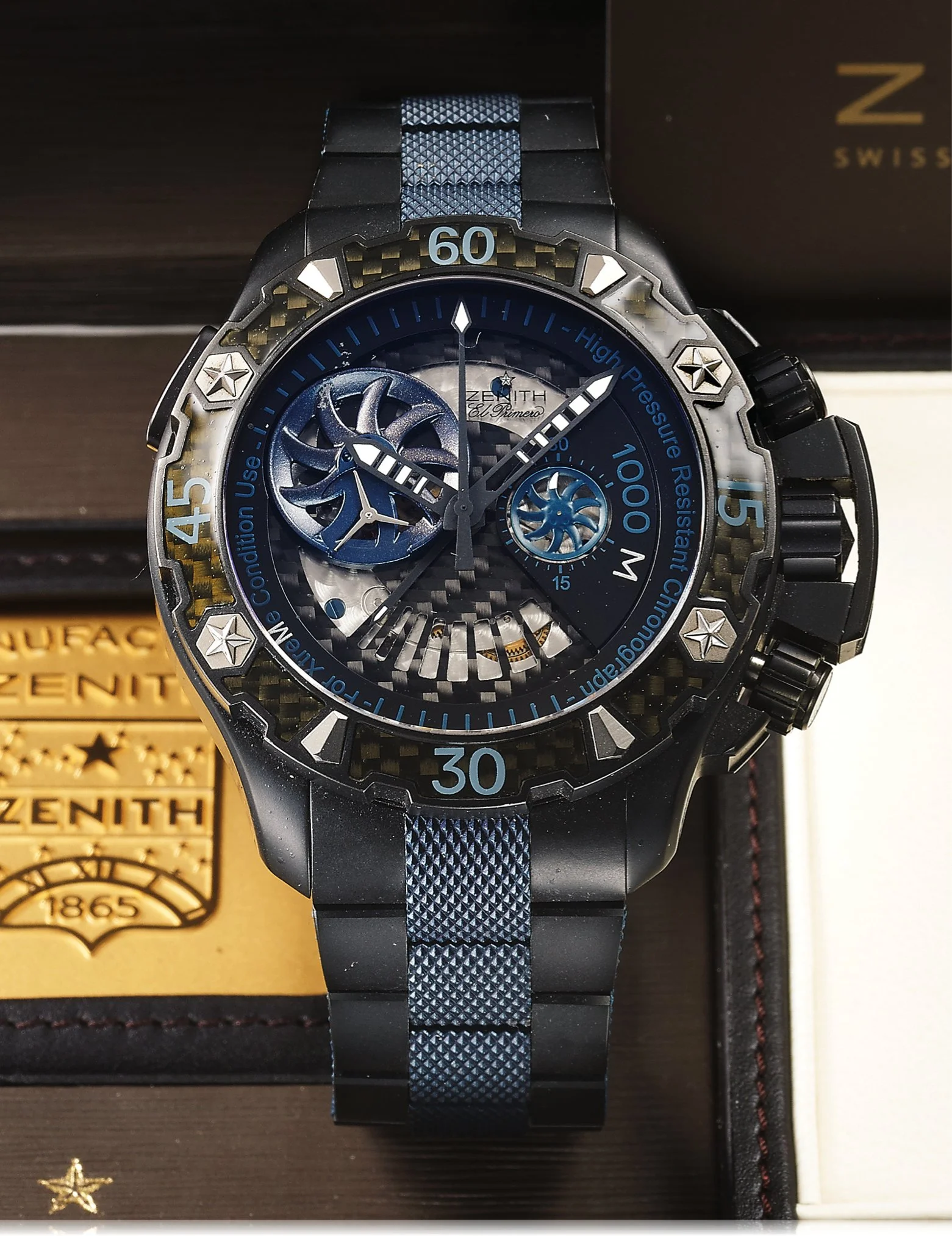
The Defy Xtreme Sea (Ref. 96.0529.4000)
I ended up pulling the trigger the same day I saw it at the dealer. I was able to negotiate a reasonable price, and I was sincerely awestruck by its aesthetics. It felt like a sports watch that you could wear on formal occasions. Eight years later, I do not regret the purchase and I think it is one of those underrated watches that may become more and more desirable (if not outright collectible) as time passes.
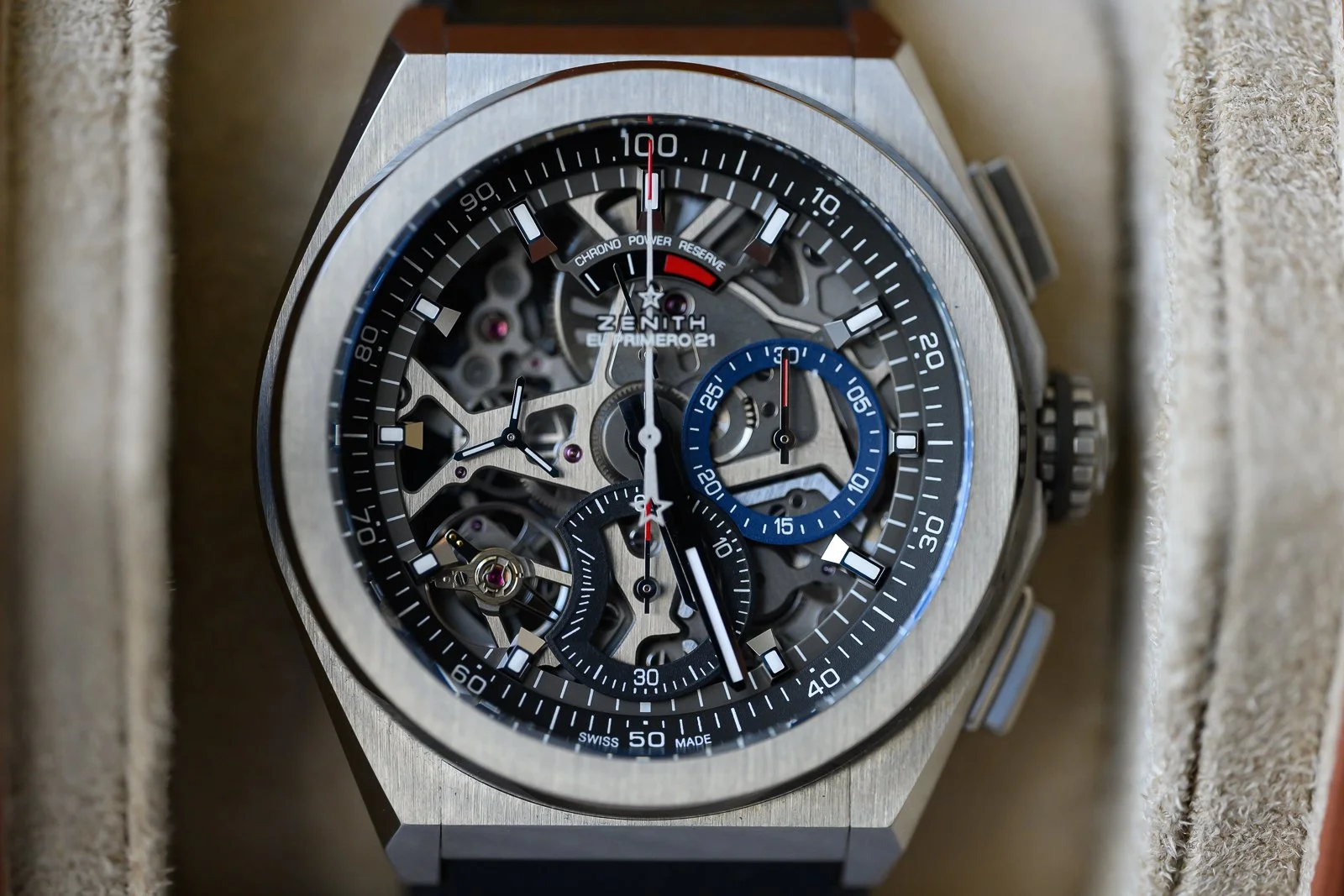
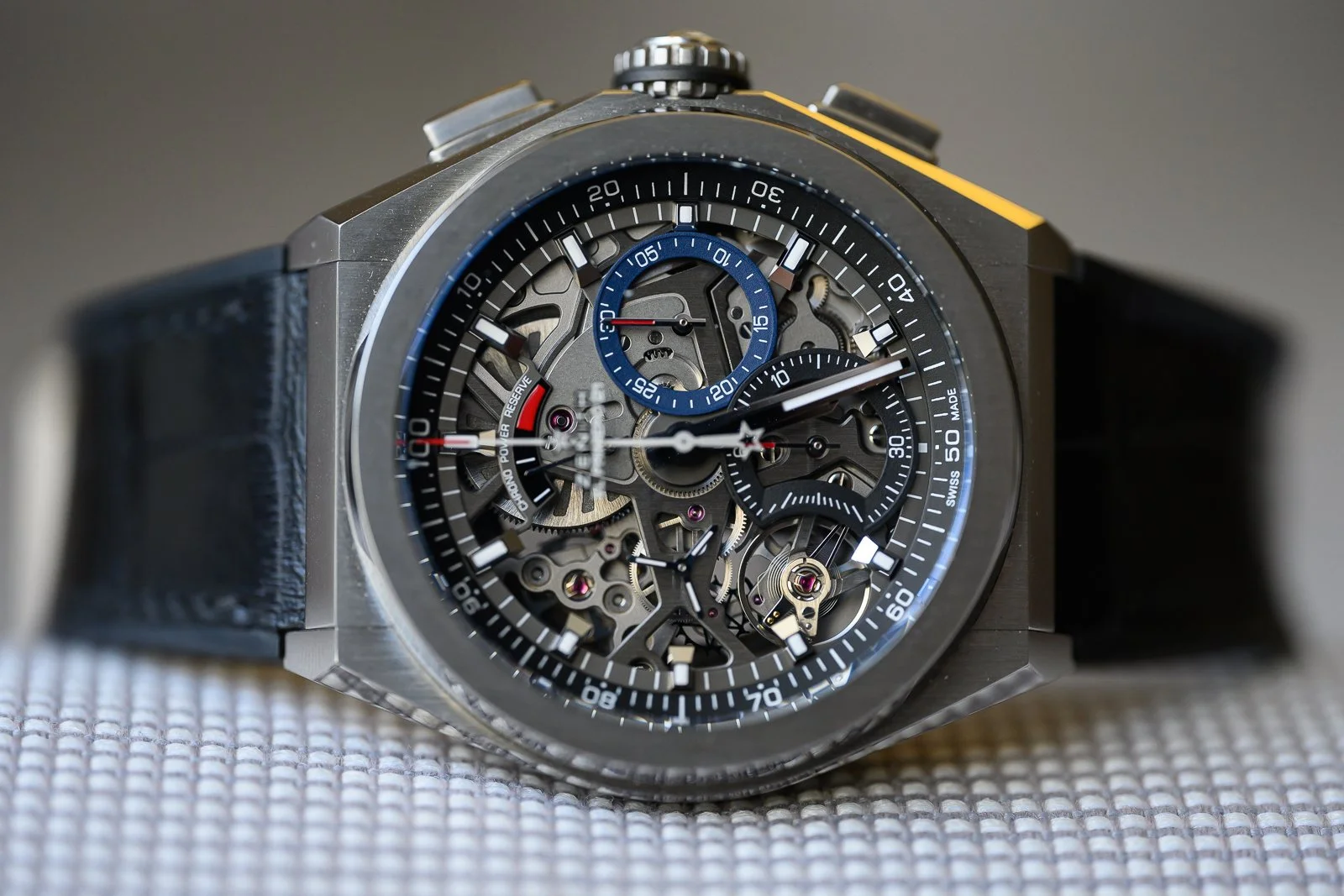
One of my favorite aspects of the watch, I insist, is the carefully achieved skeletonization. It is hard to think of a better skeleton dial at this price point. My relationship with this type of watches is rather difficult: I love them when they are well executed, but I think most of them are rather ugly. In fact, the skeletons that I tend to like are at the rather unattainable price point of the Breguet Tradition, the AP Royal Oak Double Balance Wheel Openworked, the Vacheron Constantin Overseas Tourbillon Skeleton or the Moser Pioneer Cylindrical Tourbillon Skeleton. Yet looking at the ones that are currently on offer, I am comfortable saying that the Defy 21 punches well above its price point in terms of aesthetics. It's all about the details: While it is not as crisply executed as in the promotional video tends to suggest, the Zenith star-shaped rotor remains one of my favorite aspects of the watch. The manufacture has used five-pointed Zenith stars in their rotors since 1969, but they were mostly semi-circular rotors with the star motif. Jean-Claude Biver's redesign in 2017 was the first one to strip away the outer semicircular ring entirely, turning the oscillating weight itself into an insanely beautiful free-standing five-pointed star.
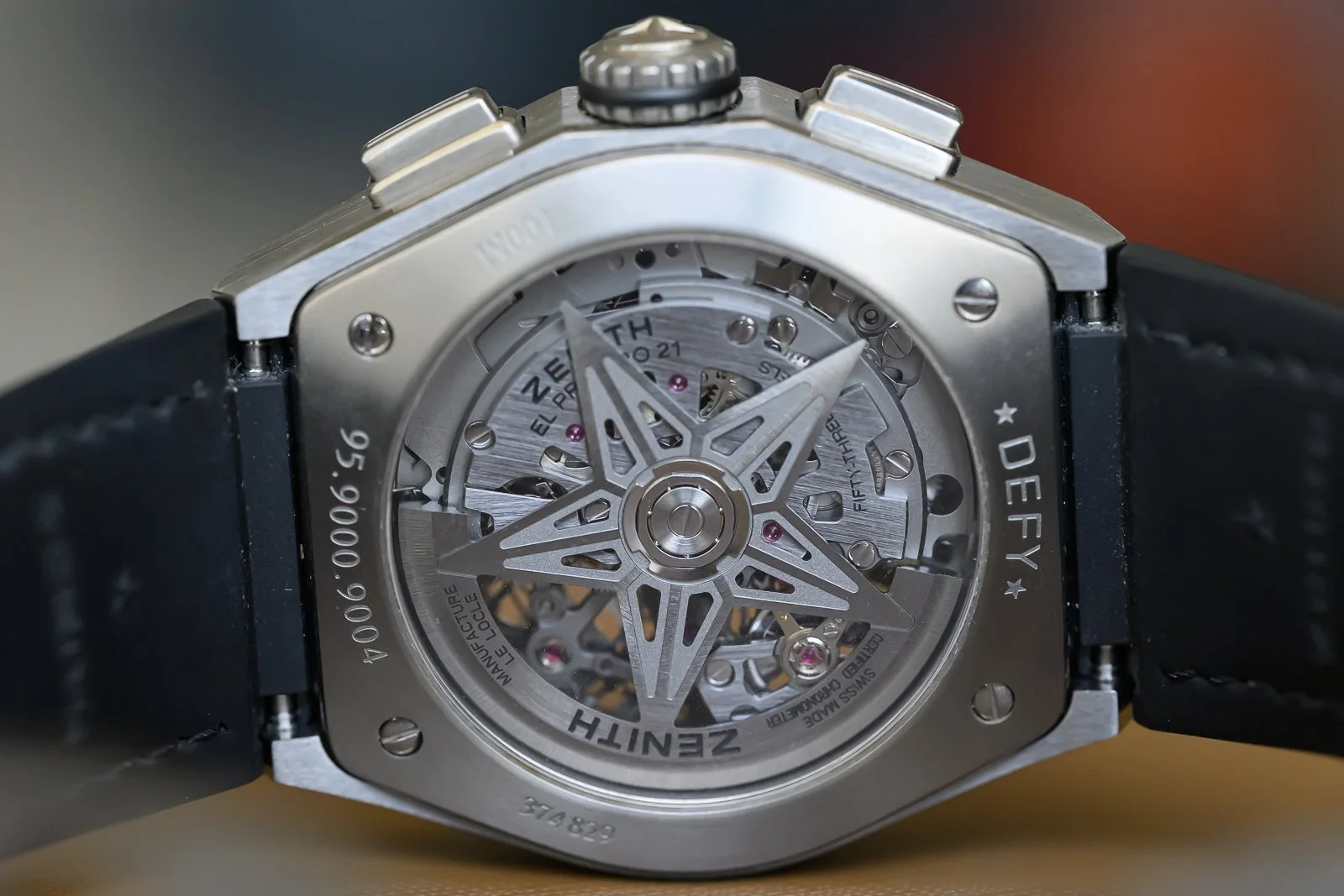
There are no words to express how much I love that rotor.
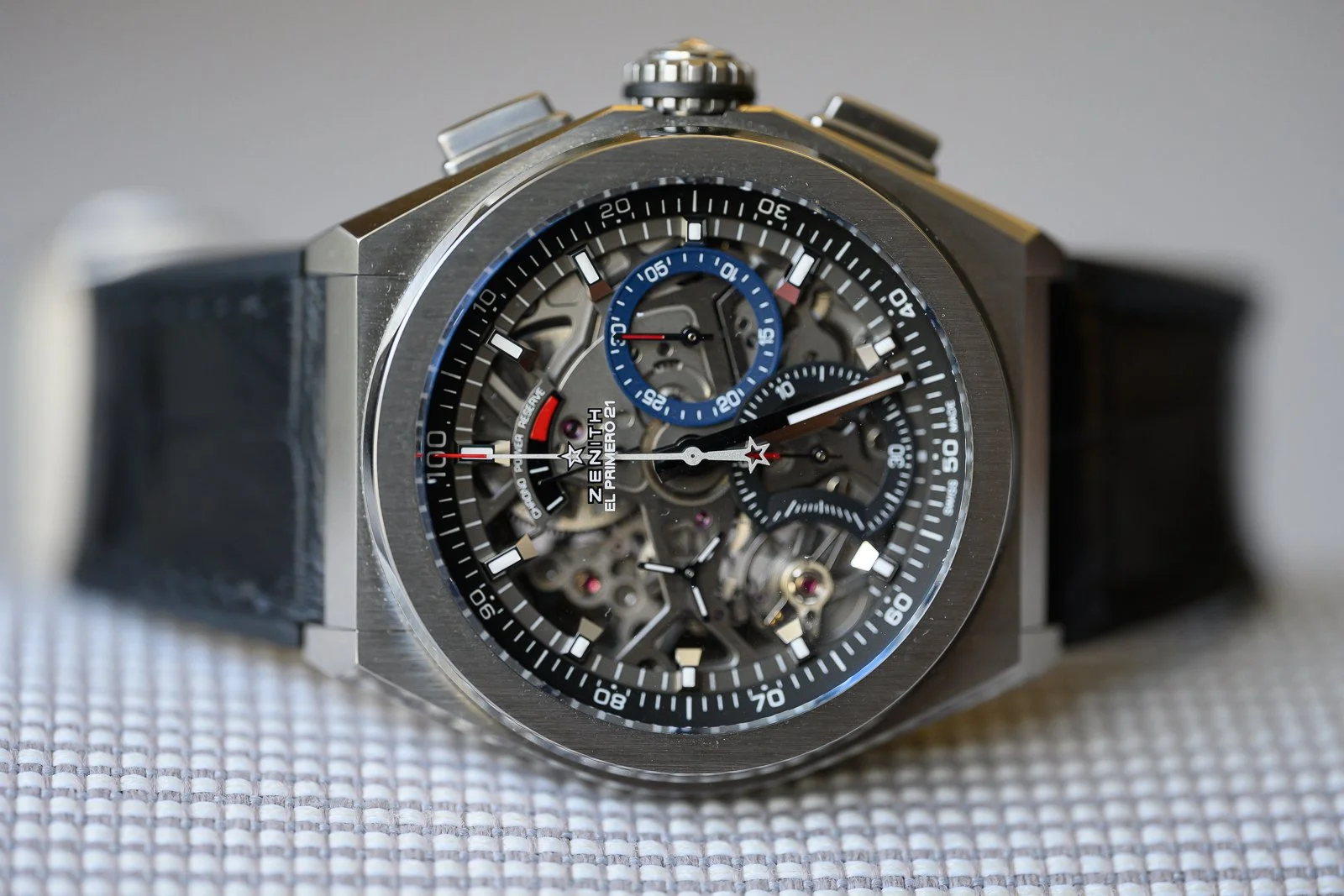
Overall, what you get in terms of aesthetics is a trapezoidal case that carefully matches the shiny lustre of the beautiful skeleton dial with the more understated (almost industrial) matte gray tone of the titanium. It is primarily a sports watch, but I was right in my assumption that the black alligator-coated rubber strap and the tasteful (not overly colorful) skeletonization make it a very versatile watch that you can easily wear with dressier, more formal outfits. This versatility is accompanied by significant wrist presence that doesn't manifest in excessive weight. In fact, the watch feels extremely light for a 44mm case at just 106g on the strap.
The El Primero Calibre 9004 is kind of awesome. Not only is it a beautiful piece of horology but, in tune with Zenith's tradition of manufacturing in-house high-beat chronographs, it features a 1/100th of a second chronograph that is a sight to behold. With one click of the pusher, you activate a central hand that makes a full rotation every second. This is a very neat party trick, even amongst the uninitiated. It is compelling because it feels like an unequivocally mechanical contraption that spins at a dizzying speed while producing a rather soothing buzz and, if appreciated carefully, a certain vibration. It is also a very rare complication. It is found in only three other mechanical watches, all of which I find rather ugly, including the F.P. Journe Centigraphe Souverain. The latter is perhaps the most mechanically interesting of them all because it runs at a conventional 3 Hz (21,600 vph) and relies on clever gearing and energy release from the barrel to drive a sub-dial hand at 10 o'clock that makes one full revolution per second. However, I do find it one of the least aesthetically appealing watches made by F.P. Journe.
Calibre 9004, however, does come with some downsides. Firstly, unlike Journe's rendition of the 1/100th second chronograph, it requires two separate escapements: One for the time and one for the chronograph. This makes it feel rather modular, as opposed to the well-integrated in-house chronograph movements that Zenith is legendary for. Moreover, due to the high energy that is required to power the 360,000 vph, the chronograph only has about 50 minutes of power reserve (the watch itself runs for 50 hours), which calls its practicality into question and limits its usefulness. Most of the events I usually time tend to exceed 50 minutes. In that vein, given that it has a power reserve indication at 12 o'clock, it is kind of disappointing that it only shows the power reserve for the chronograph. To complete the list of qualms, the dial does not have a conventional seconds hand. Instead, the skeletonized model features what collectors call three-spoke small seconds, which essentially consist of three prongs, none of which is clearly marked as the actual pointer for the seconds. That makes it impossible to synchronize the watch to a reference timekeeper. I find this to be one of the silliest design decisions that Zenith made, simply because it renders the whole hacking of the movement rather useless. All of the above, together with the fact that the movement does not include a date complication, makes one wonder about the practicality of the watch and how much of a gimmick the whole 1/100th of a second thing actually is.
There is one more issue with Calibre 9004: when originally introduced, Jean-Claude Biver and the spokespeople for the brand suggested that it would feature a newly patented material for its hairsprings. In fact, the GPHG entry for the watch still states that "Its double-chain structure is based on two regulators, made of Carbon-Matrix Carbon Nanotube composite, a patented new material that is insensitive to magnetic fields and temperature gradients to a degree well above existing norms." Right around the time that I bought it, I was slightly puzzled by the fact that the brand had dropped any mention of this new carbon-matrix carbon nanotube composite from all marketing materials. It turns out that the composite was only ever used for the hairsprings, while the escape wheels and pallet forks were made of silicon (silicium) to reduce friction and inertia at 50 Hz. The rumour is that the innovation was quietly discontinued due to LVMH struggles to scale the carbon nanotube hairspring reliably for mass series production. SJX reported in September 2025 that a new patent filing number WO2025114588A1 filed by TAG Heuer provides some hints about the issues that plagued the original 2017 hairsprings. As SJX put it: "The composite material, in its raw form, is water permeable. This means that the original springs absorbed water and other liquids, which in turn affected their qualities (mass, natural frequency). In any watch there are plenty of lubrication points — not to mention the ever-present humidity in the air, all which seem to have negatively affected the original carbon springs." Be that as it may, I can report as an owner and early adopter that Calibre 9004 has been rather difficult in terms of maintenance: Just a few days after I purchased it in 2018 it had an episode where it was gaining some 20 seconds or more per day (I sent it to Switzerland and the issue was fixed under guarantee) and some 5 years later the chronograph minute counter at 3 o'clock simply stopped responding. It was stuck to the point that I had to send it for repair yet again, this time from my own pocket. I wonder whether issues like these are part of the reason Zenith seems to have moved on: the original Defy El Primero 21 no longer features prominently in Zenith's online catalogue, and the spotlight has shifted to the Defy Extreme (which still uses Calibre 9004) and the Defy Skyline. In general, the silent walk-back of a feature raises the question of whether brands should be obliged to compensate customers for broken promises that were presented as central to a given proposition.
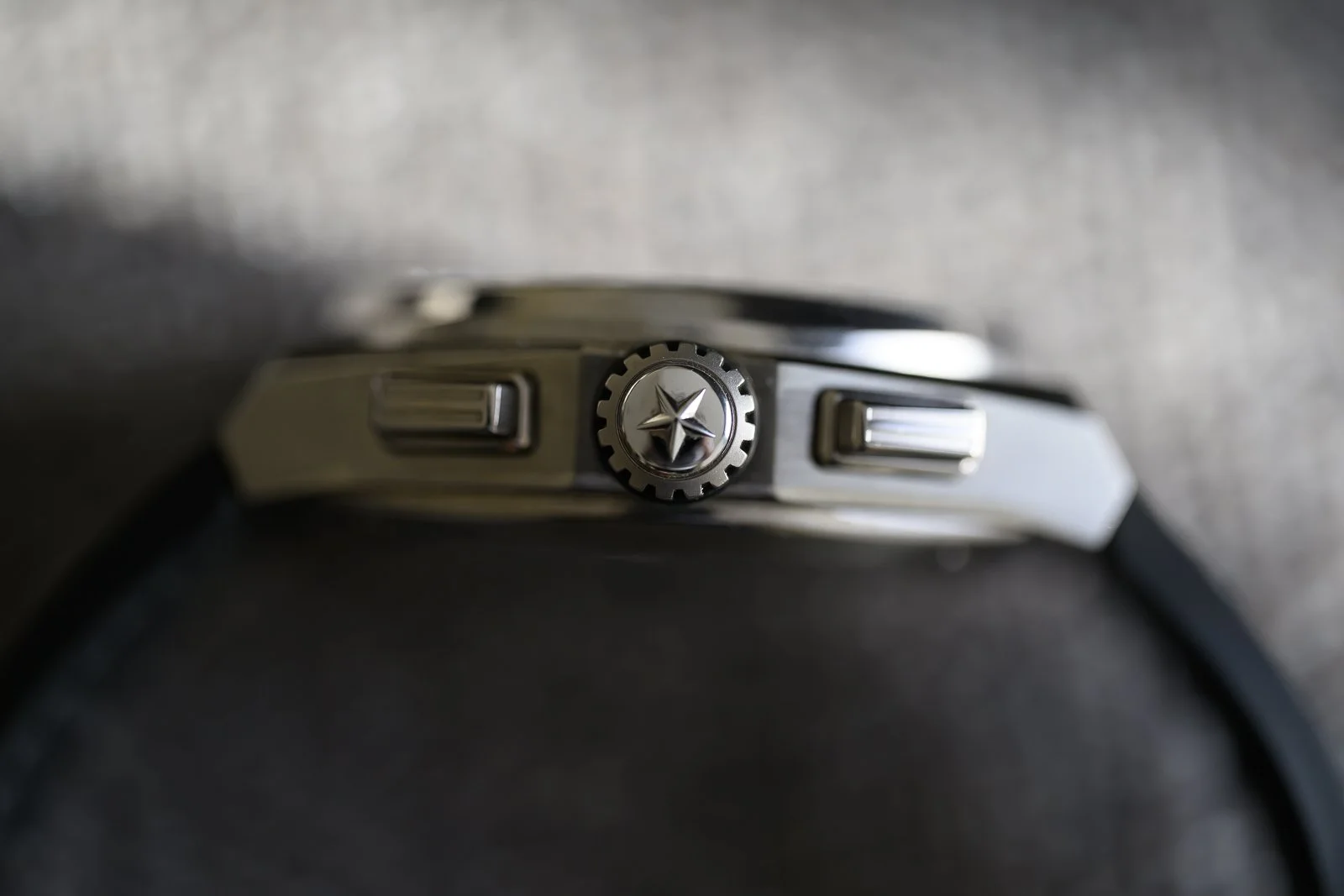
The other issue to be reported has to do with comfort. It appears that new models have somewhat addressed this issue, but I can confirm that the titanium deployant buckle in my very early reference number 95.9000.9004/78.R582 is extremely uncomfortable. In fact, the whole strap and buckle setup seems to be conceived with very little regard for ergonomics: The strap loop seems to flatten out quite dramatically at the buckle, leaving more room on the sides than is needed and very little breathing room between the caseback and the buckle. The result is that the watch will leave marks on the back of your wrist if, like me, you like to wear your watches very snugly. Comfort issues aside, now that the watch seems discontinued, I wonder how hard it would be to find replacement straps that fit the peculiar case design.
Finally, as it happened with most watch brands at this price point in the 2010s, too many limited editions were produced. There are approximately 23 numbered limited editions of this watch and 5 boutique/special editions. This practice is now mostly thought of as rather pernicious and I do think it detracts from the legacy of the Defy21, even if reference 95.9012.9004/69.R582 (offered in a box set of three watches that I didn't buy because it included a very ugly Chronomaster 2) is rather dreamy. It is a 50-piece edition that features three solid, overlapping A386 tricolor sub-dials (light gray, anthracite, and blue) giving the 9 o'clock running seconds a real, graduated sub-counter with a conventional pointer hand instead of the open skeletonized propeller.
Despite these hiccups, I remain a proud owner of the Skeleton Defy El Primero 21 Chronograph in titanium. Very few other watches in my collection have received as many compliments: "This is the watch you wear when you want to impress people" said a good friend of mine, suggesting that the high polish of the hour markers must be the shine of some kind of precious stone. I wear it relatively often, and I think it is a great choice for anyone looking for a tasteful and versatile rendition of a skeleton dial and/or a rare complication at a price point that doesn't break the bank.
Pros:
Amazing aesthetics. It is a very tasteful rendition of a skeleton dial and the combination of shine and matte elements is sure to catch the eye of both watch aficionados and laypeople. It is quite possibly the best execution of a skeleton dial at its price point and well beyond it.
I love the five-pointed star rotor. It is one of my favorite design elements of the watch and in this incarnation that strips away the outer semicircular ring of previous models, it is a beautifully executed, first of its kind, free-standing five-pointed star. I can't get enough of it.
The 1/100th of a second chronograph. No matter how gimmicky and impractical you think it is, there is something amazing about a mechanical contraption that allows for that hand to spin so fast across your dial and hum so delicately. It is not just a great party trick, it is a really cool feat of engineering and a very rare complication to add to any collection.
The versatility: While it is unequivocally a sports watch, it is not one of those gaudy skeleton dials that you can only wear with sneakers. You can definitely wear it with casual and even formal outfits.
Cons:
The practicality of a 50-minute power reserve for a chronograph complication is rather questionable. It is not the most useful of chronographs.
I kind of hate the fact that the three-spoke small seconds at 9 o'clock do not have a reference point for the seconds. It is rather silly to have a hacking function and not be able to synchronize the watch to a reference timekeeper.
The movement architecture feels rather modular with one separate escapement for the chronograph and one for the time. This pales in comparison to the legendary integrated chronograph movements that Zenith has become famous for.
The promised Carbon-Matrix Carbon Nanotube hairsprings were quietly removed from the spec sheets by Zenith. This is disappointing because the watch was indeed advertised as pushing boundaries for escapement technology by Jean-Claude Biver himself.
There are some questions about how robust Calibre 9004 really is. I have had to send it out for repairs twice since I bought it in 2018, which is more than most of the watches in my collection.
It doesn't have a date complication. I personally love date complications.
As widely reported, the buckle and the strap are very uncomfortable. They tend to leave marks on the back of your wrist unless you wear the watch very loose.
Too many limited editions/variations were were made (Approximately 28). This is a terrible practice.
Some Key Specs
Reference: 95.9000.9004/78.R582
Launched: 2017 (Baselworld)
Case: Brushed titanium, 44mm diameter, 14.5mm thick
Crystal and caseback: Sapphire crystal, transparent caseback
Water resistance: 100m (10 ATM)
Dial: Openworked (skeletonized), with two counters in contrasting colours
Movement: Zenith El Primero 9004 (El Primero 21), in-house automatic chronograph, 293 components, 53 jewels
Frequency: 36,000 vph (5 Hz) for timekeeping; 360,000 vph (50 Hz) for the chronograph
Power reserve: Approx. 50 hours (watch); approx. 50 minutes (chronograph)
Functions: Central hours and minutes; small seconds at 9 o'clock; 1/100th-of-a-second chronograph with a central hand making one rotation per second; 30-minute counter at 3 o'clock; 60-second counter at 6 o'clock; chronograph power reserve indicator at 12 o'clock
Strap and clasp: Black rubber strap with alligator-leather coating; titanium double folding clasp
Specifications from Zenith's GPHG entry and authorized-dealer listings.